
 Tonny Makar
 There are more than 3.5 million expatriates in Dubai, constituting approximately 90 percent of the total population. That figure itself speaks volumes: this is a city that has been constructed, very purposely, so as to receive people who come out of another city. It is one of the most desirable relocation spots on earth with zero income tax, a state-of-the-art infrastructure, a warm climate, and a way of life that is both affordable and awe-inspiringly opulent. However, to successfully move here, one has to know how this city really works, where to get a visa, how much you will spend on housing, what to eat, what not to eat, and what culture does not want the newcomer to know until he arrives.
Visas: Know your business prior to arrival

The majority of the expats come on an employment visa sponsored by their employer, which pays for the visa fees and links the residency to the employment. Independent movers can request a freelance visa, investor visa, or the popular Golden. Most expats have no avenue of becoming citizens, but with a residency, they have the gateway to anything the city has to offer.
The Golden Visa: Long-term residency without dependency on the employer
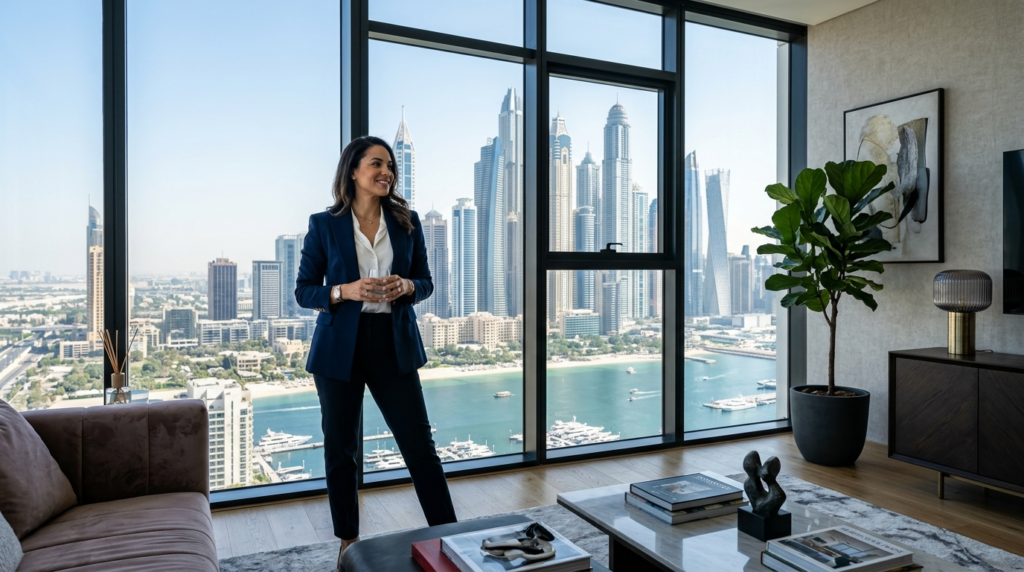
The UAE Golden Visa is the major change in residency in Dubai in years. It provides a 10-year renewable residency that does not require an employer and is ideal among business owners, remote employees, investors, and senior professionals. In 2026, eligibility has been extended to include additional categories. An AED 2 million property investment is eligible, as is experience in an expanding list of priority areas. It eliminates the susceptibility of normal employment sponsorship.
Cost of living: How much you really have to make to live comfortably

Dubai is the 15th most expensive city in the Middle East and 15th in the world, according to the Mercer 2025 Cost of Living Index. It is estimated that an average monthly expenditure is USD 2,514 per head and USD 5,509 per family of four. To live comfortably in 2026, the general recommendation to Western professionals is to aim at an income of USD 5,500 to 7,000 a month. Without income tax, the take-home pay is well beyond the same pay in the UK, US, or Australia.
Transport: Public transport is good, but a car makes all the difference
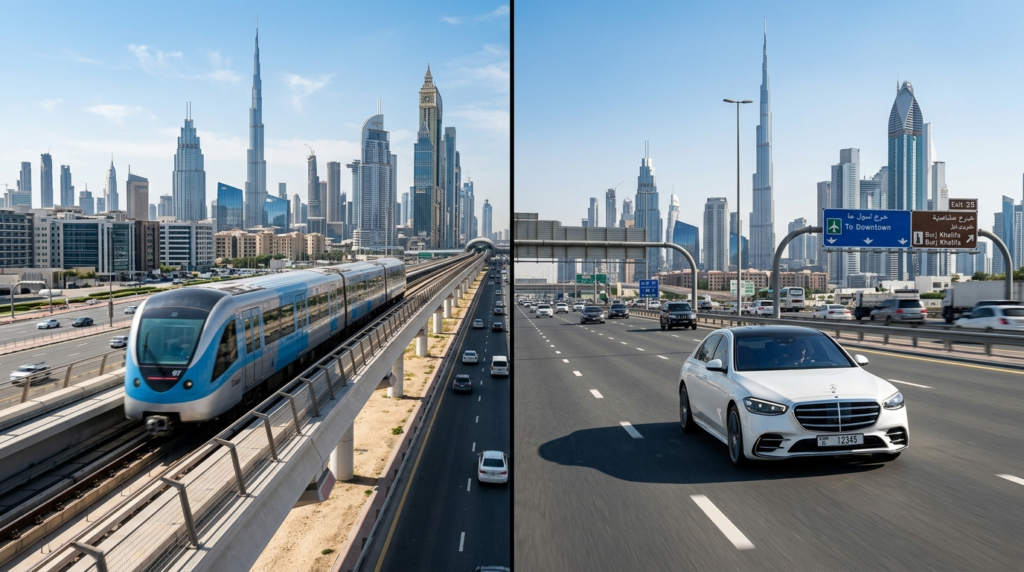
The Metro in Dubai is neat, air-conditioned, timely, and covers the major streets in the city. An average transit pass costs about AED 350 monthly. Yet, there are numerous areas in Dubai that do not have any public transportation, and the city is built on the basis of owning a car. The price of running a personal vehicle is much cheaper than in other similar cities around the world, with fuel prices at about AED 2.82 per liter.
Schools: What families need to know before they commit to a neighborhood

There are more than 200 British, American, Indian, French, and IB, among other private schools, in Dubai. Public schools are Arabic-based and are mainly UAE nationals. The annual fees of the private schools are between USD 10,800 and USD 24,500 or higher depending on the type of school.
Banking: How to open a bank account and work with your money
Expatriates are allowed to open bank accounts in Dubai provided they have a valid residency visa and Emirates ID. Expatriate-friendly accounts are provided by most of the large local banks such as Emirates NBD, ADCB, and Mashreq. Some require a minimum monthly salary deposit. The UAE dirham is pegged against the US dollar at a fixed rate, thereby eliminating currency volatility in the financial planning.
Culture and laws: What to know before you come

Dubai is truly a very tolerant city in the Arab world but a city that has a legal system very different from the western norms. Lovemaking in the open is frowned upon, alcohol is sold in licensed places and not everywhere, and Ramadan alters people’s expectations of behavior.
The straight truth: What Dubai is and what it is not

Dubai will pay off individuals who come with realistic expectations, a solid financial strategy, and flexibility to change. There is no permanent social safety net for non-citizens in the city, and the residency ceases with the termination of employment unless you have a Golden Visa.